
Can Literature Change Society?

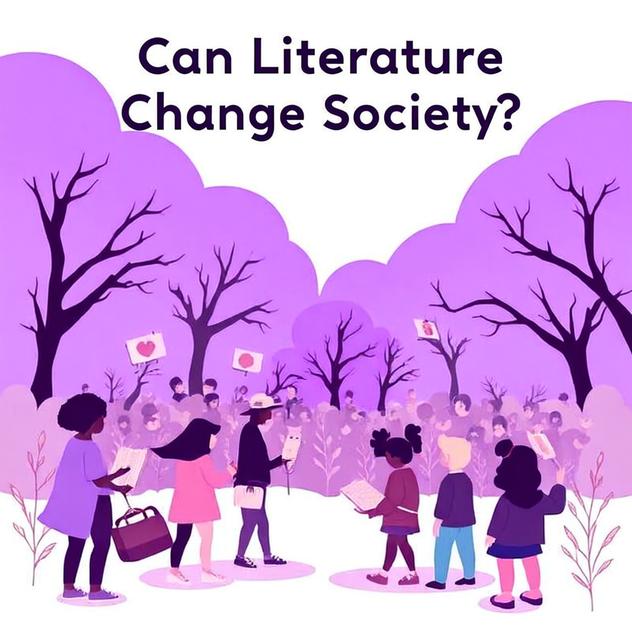
The ability of literature to drive social change remains one of the most contentious issues in literary studies and cultural criticism. Some scholars claim that literature acts as a significant catalyst for change, while others believe its influence is more subtle and less direct than widely thought. This analysis examines both viewpoints to provide a well-rounded understanding of literature’s role in society.
The Argument for Literature’s Transformative Ability
Prominent figures in literary criticism, such as Rita Felski and Marjorie Garber, contend that literature profoundly influences how societies perceive their own identities. Their research indicates that novels, poetry, and drama provide environments in which readers confront different viewpoints, question established beliefs, and cultivate empathy for experiences distinct from their own. This emotional and cognitive involvement can slowly change cultural beliefs and principles.
Historical instances back up this perspective. Uncle Tom’s Cabin is often mentioned as having shaped American perspectives against slavery in the nineteenth century. Likewise, texts tackling social injustice—such as Upton Sinclair’s The Jungle or Harper Lee’s To Kill a Mockingbird—documented oppressive systems and inspired readers to pursue change. These writings offered language and frameworks enabling societies to debate and challenge prevailing power structures.
The Restrictions of Literary Impact
Nonetheless, different academics present significant opposing viewpoints. English Literature scholar Andrew Piper highlights that establishing a direct link between reading and social change is methodologically difficult in his research on the social impacts of reading. He asserts that literature functions within wider social, economic, and political frameworks that ultimately influence whether textual concepts resonate.
Moreover, critics highlight that literature usually targets educated, relatively affluent audiences—individuals already predisposed to contemplation and transformation. The Journal of Literary Theory highlights that without additional institutional backing, political mobilisation, and systemic changes, the influence of literature alone cannot achieve enduring social change. Literature can support current progressive values but seldom changes adversaries or dismantles systemic barriers.
A Subtle Comprehension
Current academic research is progressively embracing a moderate stance. Literature seems to be most impactful when integrated into broader social movements rather than functioning as a standalone entity. Cultural theorists have shown that texts acquire transformative strength when they coincide with active political movements, educational efforts, and community organising. The civil rights movement was influenced by literature, yet literature by itself did not establish legal equality.
This viewpoint recognises the true cultural importance of literature while maintaining practical expectations about its influence and scope. Literature can illuminate ethical dilemmas, broaden creative horizons, and offer artistic experiences that deepen human understanding. These inputs are crucial for personal awareness and shared cultural remembrance.
Reconceptualising Literary Influence
Contemporary academics propose broadening our understanding of literary influence to encompass more than just direct changes in social policy. Literature moulds language, shaping how future generations express concepts of identity, justice, and human relationships. Texts that introduce new literary genres or question aesthetic norms form cultural frameworks that subtly influence society over time.
The evidence indicates that literature acts neither as a crucial nor a negligible influence on social change. Instead, it serves as a significant cultural instrument that can raise awareness, safeguard dissenting perspectives, and present alternative options. The genuine strength of literature lies in its ability to reveal the unseen, amplify the voices of the marginalised, and broaden readers’ moral and imaginative perspectives. The extent to which this results in tangible social change depends on broader factors: engaged movements, institutional change, and collective efforts. For literature students, this intricacy is significant—it shows that grasping literature’s function requires engaging with historical context, institutional frameworks, and the complex realities of social transformation. Literature holds significant importance, yet its influence operates through complex, multifaceted processes rather than straightforward mechanical causation.
